'Criticism is the only thing that stands between the audience and advertising.' - Pauline Kael

*


Paul Robeson With Oakland, Ca. Shipyard Workers, 1942

Black August

So in order to best cover all bases, progressive film critics tend to consider three categories of assessment, rather than two: The Good, The Bad and The Ugly. The first two are self-explanatory. And the third category is reserved for movies that may have been impressively put together, but there's just something offensively anti-humanistic about them.

Stay tuned......

The Organizer

Tuesday, March 23, 2010

Political Film: The Coca Cola Case

The Coca Cola Case

The Coca Cola Case

The truth that refreshes


By Billy Wharton

“Sailing round the world in a dirty gondola,” Bob Dylan sang in 1971, “Oh, to be back in the land of Coca-Cola!” After forty years of corporate globalization, Dylan would be hard pressed to find a place that isn’t the land of Coca-Cola. Multinationals have torn up the globe converting the repression of workers into cheap labor and free trade agreements into new market opportunities all in the name of ever-increasing profit margins. Left in their wake are legacies of environmental destruction, corrupt governments and employer violence. This process is precisely what a documentary currently making the rounds in campus political circles, by German Gutierrez and Carmen Garcia’s entitled “The Cola-Case,” aims to expose.

CONTINUE TO READ REVIEW HERE

More information about The Coca-Cola Case is HERE....

Political Film: Derivatives Come To The Movies

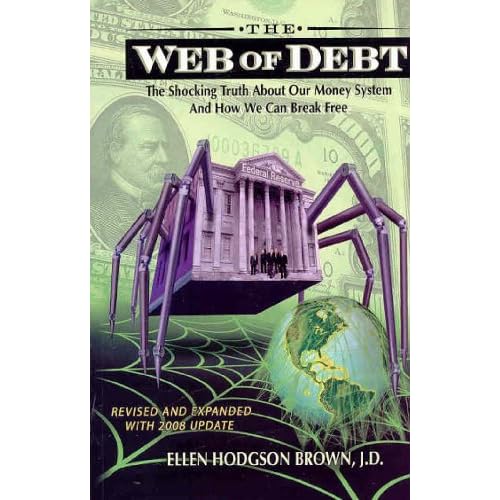
Ellen Brown is the author of Web of Debt: The Shocking Truth About Our Money System and How We Can Break Free. She can be reached through her website.


Will Hollywood Go the Way of Enron?
Derivatives Come to the Movies

By Ellen Brown

As if attacks from paparazzi and star-crazed fans weren’t enough, Hollywood stars may soon have a literal price put on their heads by investors in the Cantor Exchange, a real-money trading platform where people can bet on the gross profits of upcoming movies. Sales of The Dark Knight skyrocketed after Heath Ledger died unexpectedly, and so did sales after the deaths of Michael Jackson, Elvis Presley and Marilyn Monroe. Will greed-driven investors now be laying in wait for the stars of movies they have bet on?

CONTINUE TO READ ARTICLE HERE

The Birth Of The Workers Film Movement

Shirtwaist Factory Workers prepare to strike.

Screening Room: The birth of television news and US documentary in radical underground filmmaking, and the misremembering of history. Filmmaker Tom Hurwitz on the legacy and impact of the Great Depression Workers Film And Photo League, the Red Channels purges, and a people's cinema movement born in vacant lots and union halls.
Also...Transplant take-out medical terrorism and recipients resistance uprising, in Repo Men.
And...Stephen Wolf, reads poetry commemorating the anniversary of the Triangle Shirtwaist Factory Fire, March 25,1911

Monday, February 15, 2010

Avatar: Same Old Hollywood Product, Or Something New?


By Joe Giambrone

...The overwhelming success of Avatar with audiences has actually given me some hope (not the plastic Obama brand of “hope” as substitute for moral policies). It is impossible to not get it. It is impossible to not accept that moral questions remain when people decide to take from others and to demonize them in order to achieve their desired “facts on the ground.”

Avatar is a timeless story, mythic, allegorical, and yet grounded to our actual history and to our current events. Perhaps art can go beyond imitating life and progress up to nudging it just a little in a better direction....

CONTINUE READING ARTICLE HERE

Joe Giambrone is the editor of The Political Film Blog. He hopes to hit an iceberg and sink just a fraction of the depth James Cameron has plummeted. Send political/film articles to: polfilmblog at gmail.com.

Saturday, February 13, 2010

Israeli Wall Protesters Take On Avatar

They equated their struggle to the intergalactic one portrayed in the film. Israel says the wall is needed for its security. Palestinians consider it a land grab.

  • AP & Reuters
  • Published: 00:00 February 14, 2010
  • Gulf News

  • Palestinians, Israelis and foreign activists dressed as characters from the movie Avatar campaign against the Israeli wall during a protest in the West Bank village of Bilin near Ramallah on Friday.
  • Image Credit: Reuters
Image 1 of 2
12

Occupied Jerusalem: Palestinian protesters have added a colourful twist to demonstrations against Israel's wall, painting themselves blue and posing as characters from the hit film Avatar.

The demonstrators also donned long hair and loinclothes on Friday for the weekly protest against the wall near the village of Bilin.

They equated their struggle to the intergalactic one portrayed in the film. Israel says the wall is needed for its security. Palestinians consider it a land grab.

Symbolic

The protests have become a symbol of opposition. They often end in clashes with Israeli security forces involving stones and tear gas.

The "Avatar" protest comes a day after the Israeli government began rerouting the wall to eat up less of the Palestinian village.

Palestinian officials say tracks have been laid down for a modified route near the village of Bilin. The officials spoke on condition of anonymity because they were not authorised to discuss the matter before official confirmation.

The Israeli Supreme Court ordered the government two and a half years ago to modify the route around Bilin.

Meanwhile, Israeli soldiers shot and killed a Palestinian in the occupied West Bank on Friday as he tried to stab them, an army spokeswoman said.

The man, identified by locals as 41-year-old Fayez Faraj, was wounded in the Hebron shooting and taken to an Israeli hospital, where he died.

Locals said Faraj, a father of 10, had worked in a shoe factory. Television footage showed a small yellow cutting blade lying next to his body.

A large Palestinian city where several hundred Jewish colonists live with an Israeli military garrison to protect them, Hebron has seen frequent violence.

Friday, February 12, 2010

Racial Politics And The Black Image In Hollywood


By Sikivu Hutchinson
Our Weekly, Los Angeles

....Critical darling Precious (directed by African American filmmaker Lee Daniels) and audience favorite The Blind Side have both garnered Oscar nods for portrayals that some Black critics and moviegoers have dubbed condescending and stereotypical. The irony is not lost on novelist Ishmael Reed, author of the forthcoming Barack Obama and the Jim Crow Media. In a recent article in the New York Times Reed wrote, “The Blacks who are enraged by Precious have probably figured out that this film wasn’t meant for them. It was the enthusiastic response from white audiences and critics that culminated in the film being nominated for six Oscars by the Academy...an outfit whose 43 governors are all white and whose membership in terms of diversity is 40 years behind Mississippi”....

CONTINUE TO READ ARTICLE HERE

Sikivu Hutchinson is the editor of blackfemlens.org and the author of the forthcoming book Mortal Combat: Black Atheists, Gender Politics and Secular America. She writes for Our Weekly, is member of the Women Film Critics Circle, The James Agee Cinema Circle, a commentator on Pacifica's KPFK 90.7FM. and a reporter for the LA Women's Desk of the WBAI Radio Women's Collective in NY.

Tuesday, January 19, 2010

JACC Anti-Oscars Discussed On The Air!

Brownie approved

And Janet Napolitano is still in the news. And she will not live her phrase down. She can speak of context, being misquoted, you name it. She said it. It is on her.

Today I listened to
WBAI's The Arts Magazine which focused on Marx At The Movies today. Click here for WBAI archives and it is under 2:00 p.m. for today's broadcasts. I wish WBAI would keep their programs up longer than 89 days (it is no longer even 90).

It was a very entertaining hour. The blacklist was discussed included Karen Morley who was blacklisted for refusing to answer McCarthyism questions. She went on to run for office on the American Labor Party's ticket in 1954.

Louis Proyect was the guest for the first half hour. C.I. includes Mr. Proyect in the Iraq snapshots from time to time. This was my first time hearing Mr. Proyect on the radio and I found him to be a very entertaining guest and wondered why I -- with all my hours and hours and hours of listening to Pacifica Radio had not heard him before?

They addressed the James Cameron film. Gilad Atzmon reviewed the film at
Dissident Voice ("A Humanist Call from Mt. Hollywood"). I did disagree with the call thatThe Hurt Locker has no point of view. I would suggest they both go back and watch again. But that is fine, we can disagree. And we agreed on "King Rat" at least. Elia Kazan. I cannot draw a line between the man and his art, sorry. I think he did a despicable thing (naming names, etc.) and really did not believe that there was any comeback from that.Click here for Mr. Proyect's view of 2009 in films.

A woman was the guest for the second half hour and they spoke more about the blacklist in that section and also had a lively discussion on how (badly) mothers were portrayed in 2009.
Ruth's Report
LISTEN TO THE SHOW HERE
An excellent show. I was driving into NYC, and could concentrate on it. Packed with good info, wished I had been able to write down all the movie titles you mentioned, you presented an excellent context for the reviews. Congrats.
B. Aziz

Friday, January 1, 2010

Peace On Earth 2010


A friend sent me this, I had never heard of this 1939 anti-war cartoon by MGM.
Bill Meyer, JACC

Peace On Earth (1939) Christmas Classic MGM Cartoon. World War II Academy Award Nominee for Best Short Subject (Cartoon), 1940. Originally Released on December 09, 1939.

CLICK TO WATCH CARTOON HERE

On Christmas Eve, two squirrel children ask their grandfather what men are. He describes them, then narrates the story of how humanity destroyed itself by war, as chilling scenes of armed conflict play on the screen. After the last human dies, the animals take their war implements and build homes from them, to live forever in peace.

Peace on Earth is a one-reel 1939 Metro-Goldwyn-Mayer cartoon short directed by Hugh Harman, about a post-apocalyptic world populated only by animals. The only cartoon ever nominated for a Nobel Peace Prize! It was broadcast in the US just after Germany had pre-emptively invaded Poland, a protest against Bush-Iraq-style pre-emptive wars, and before the US was attacked at Pearl Harbor and thus entered WWII.

At first glance this looks like just another typically Disney-esque cartoons featuring cute animals, but once you see those battle scenes you can see that it is so much more than that. This is an anti-war tale with well animated battle scenes that are scary as anything else that has been seen on the silver screen. Those scenes are very unsettling and tapped into the fears that many people held as Europe was at war with itself.

This film was nominated for the 1939 Academy Award for an animated short feature (it lost to Disneys "The Ugly Duckling") and was also, according to Hugh Harmon, nominated for the 1940 Nobel Peace Prize. Unfortunately the 1940 Nobel Prizes were cancelled because of World War II, so it did not win or lose that award.

Fifteen years before this release, Hugh Harman and Rudolf Ising were employees of Walt Disney - in Kansas City. Disneys first animation studio was in that Midwestern city and it was, ultimately, a failure. Following the companys demise -- and with dreams of becoming a live-action director - Walt headed west. After shuffling around Los Angeles for a while, Disney realized that his best prospect for making a living was the cartoon business.

World War II was barely four months old when Peace landed on theater screens. Given the fact that a mood of patriotism and sacrifice was soon to grip the United States, the cartoons unapologetically anti-war stance is surprising. In the short, woodland creatures elebrate the Christmas season.

Two squirrel children stumble over the lyric peace on earth/good will to men because they have no idea what men are. Grampa squirrel explains that all of the men are gone; they succumbed to the fever of war and annihilated one another. Woodland creatures rebuild civilization and mourn their loss.

Monday, December 28, 2009

Race And Politics In Movies: Obama, Precious And The Blind Side


By Sikivu Hutchinson

In the darkness of any given movie theatre, from Main Street USA to MLK Boulevard, they surround us: white America’s Hollywood objects of desire, playing romance and adventure in full amnesiac bloom. They taunt and entice, radiating spunk and derring-do in the face of strenuous man-hunting, universe-saving, dragon slaying and average hardworking Americana family-hood. Missing from the studio green light rosters are the tales of the ambitious, play by the rules black girls and boys newly-minted in the job market and beat down by underemployment. The ones who are initiated into adulthood on reverse discrimination screeds heralding the white working class as the last acceptably dumped on “minority.” The ones who are promised that the legions of Talented Tenth blacks armed with college degrees will level institutional racism. The ones who must quietly “absent” themselves from their resumes as white convicted felons, cashing in on their birthright, waltz through corporate doors.

A recent New York Times article on black college grads’ struggle to find jobs should be sobering for anyone with the deluded belief that Obama’s Talented Tenth magic will rub off on them. According to the Times, some black college grads, fearing that they will forever be consigned to fast food fryers or professional irrelevance, are changing their names from Rashida to Heidi, Omari to Chip (or Barack to Barry). Staggering black unemployment rates five percent above the national average have made black job applicants desperate to preempt racist discrimination by potential employers. In some instances, graduates of historically black colleges and universities have deleted all reference to their tenure and omitted mentions of involvement in ethnically suspect groups.

These trends point to the larger paradox of black invisibility. The Congressional Black Caucuses’ (CBC) futile White House lobby for targeted initiatives to address black unemployment underscores the divide between the image of black assimilation suggested by the hyper-telegenic Obama family and the reality of post-Jim Crow segregation. Jockeying for a white norm, blacks must effectively water themselves down, evacuate their social histories and memorialized sense of self and accomplishment. Racist death threats against Obama, coon/welfare mother cheat references on AOL news posts and Fox News fueled tea party insurgencies offer a steady avalanche of evidence that representations of blackness remain fixed in the white mainstream mind.

Indeed, the current crop of mainstream film narratives about blackness, from the blockbuster white woman’s burden romp The Blind Side to the lurid ghetto pathology of Precious—offer powerful affirmation of the seductive lure and redemptive powers of whiteness. Released in an era where the rhetoric of post-racialism has reached surreal fever pitch, both films are essentially bookended portraits of the perils of being an orphaned black child in a dysfunctional racial “subculture.” The character Precious initially achieves agency by fantasizing herself thin, “pretty” and white, while Blind Side protagonist Michael Oher escapes the “Moynihanian” churn of black poverty into the healing arms and tough love of a benevolent white mistress, or, rather, adoptive mama. Although Precious gets props for spotlighting the subjectivity of a non-traditional black female protagonist, it does nothing to disrupt patriarchal assumptions about black femininity or challenge the masculinist culture of violence that underlies Precious’ sexual abuse by her father. The unrelenting bleakness and solipsistic vacuum of Precious’ swaggering welfare mother’s den in the projects effectively lets the dominant culture off the hook. Lacking historical context or socioeconomic critique of the complicity of racist sexist social institutions, these films offer comforting retrograde portrayals of good and evil, where transformation of individual circumstance is the bellwether for social change.

Ultimately, these triumphal human spirit over adversity morality plays go down well with prevailing conservative bromides of bootstraps enterprise and white (or, in the case of Precious, light-skinned black) patronage. Popular culture messages such as these also bolster Obama’s trickle down doctrine of “benign” ghetto neglect. Bailing Wall Street and his corporate cronies out to mega-billions while kicking the CBC to the curb, Obama has symbolically wagged his finger and reminded us hardheaded Negroes once again that he never promised black America any kind of Rose Garden.


Sikivu Hutchinson is the editor of blackfemlens.org and a commentator for Pacifica Sister Station Sister KPFK 90.7FM. She is a member of The Women Film Critics Circle and The James Agee Political Cinema Circle.

Wednesday, September 30, 2009

Capitalism, A Love Story: Workers Of The World, Unite!


PDF Print E-mail
By Ed Rampell

Michael Moore is the foremost documentarian of our times. He is to 21st century America what the Soviet filmmaker Dziga Vertov, the director of the Kino Pravda (Film Truth) series, was to the Russian Revolution: the man with the movie camera, who see and chronicles social rights and wrongs, interpreting reality through a roving, relentless, restless, rabblerousing camera lens, determined to tell all to the folks out there in movie-land.

The release of a new Moore doc is a major media event. Indeed, shortly before his latest work was released, the Oscar and Cannes winner appeared on Jay Leno’s revamped NBC-TV program and on Sept. 23 (the day it opened in L.A. and New York) was a guest on Larry King’s CNN gabfest, and scheduled to visit Bill Maher’s ”Real Time” HBO show at the end of the week. What other nonfiction cineaste has such ballyhoo heft and can say that?

The good news is that Capitalism, A Love Story is another Michael Moore instant classic, and in his considerable, 20-year-long oeuvre – which spurred revitalization of the documentary as an art form, as well as an entertainment medium -- is second in quality and power only to his 2004 masterpiece, Fahrenheit 9/11.

Premiering almost exactly a year after the financial meltdown, Capitalism, A Love Story has all of the usual suspects and ingredients of that film formula which makes Moore’s movie magic. It has the tongue and cheeky characteristic that has spread to TV parodies of news exemplified by the Jon Stewart and Stephen Colbert brand of topical comedy. Capitalism opens with security camera footage of real bank robberies – what better metaphor for bank bailouts and other debacles? (As well as a playful rumination on the nature of cinema verite by a practitioner of the documentary art form.) Then there are clips from other films – one on ancient Rome, another from an instructional piece on free enterprise, and hilarious “what would Jesus do” bits.

Capitalism features some insider exposes and incisive investigative reporting – another hallmark of Moore’s filmmaking technique -- which in Sicko exposed healthcare insurance scams, and in Fahrenheit revealed the battlefield costs of the so-called “cakewalk” in Iraq. The quintessential ingredient in Moore’s motion picture recipe has been his own proletarian persona, which works because like many movie fat men, he’s funny, and unlike most U.S. leftists, he is literally a son of the industrial proletariat. There’s lots about his boyhood at Flint, Michigan, where both his father and uncle worked on GM assembly lines, mass producing cars in some bygone autotopia, once upon a time before America was de-industrialized, downsized, outsourced and union busted.

Of course, there are the usual Moore merry prankster stunts – 20 years after Roger and Me, GM throws the prodigal proletarian son out of their HQ yet again. But correct me if I’m wrong: Moore’s current Wall Street shenanigans seem like replays of the escapades on his 1990s’ TV Nation and The Awful Truth television series, when he and Crackers, the corporate crime fighting chicken, confronted white collar criminals. While droll, Capitalism’s tomfoolery never rises to Sicko’s audacious, inventive level of Moore trying to bring a boatload of ailing Ground Zero survivors to the one place under U.S. jurisdiction that guarantees universal medical care: Guantanamo Bay, where suspected terrorists are imprisoned. (He transports them to Castro’s Cuba instead, where socialism provides free healthcare to all.) Nor does Moore’s return to the scene of the crime in the Financial District in Capitalism match the sheer panache of his dispatching actors clad as Salem witch-hunters to the home of Pres. Bill Clinton’s grand inquisitor, Kenneth Starr (now ensconced, god help us, at Pepperdine!) during the multi-million dollar probe of the Monica Lewd-insky scandal and impeachment imbroglio.

Capitalism, A Love Story has its share of talking head notables – social critic Wally Shawn (of My Dinner With Andre fame), Catholic clergymen who denounce the capitalist system for its sinfulness, etc. But, more importantly and at the core of Moore’s movie method, is his putting the so-called “forgotten man” (and woman) front and center, giving them a prominent platform to tell their heartbreaking, gut wrenching stories of an America where uncontrolled greed has run amok, laying waste to the common people. (Moore defines capitalism as “legalized greed.”) Just as Roger and Me presented out-of-work autoworkers, including down on their luck Flint residents reduced to catching, skinning, eating and selling rabbits to survive in the wake of the economic cataclysm that destroyed their once thriving city. Here, in Capitalism, are Americans being evicted, including a family farmer close to snapping. As one victim of the capitalist system says onscreen: “There’s gotta be a rebellion between the people who it all and people who have nothing.”

This compassion is the heart and soul of Moore’s movies, and indeed, of the man who dared denounce Pres. Bush as the Iraq War started on live TV during his Oscar acceptance speech for 2002’s Bowling at Columbine. In Capitalism Moore raises serious points about the free market, pondering why a so-called democracy allows so many dictatorial practices in the workplace. (Jean-Luc Godard once asked why one boss has more power than 100 workers.) Moore also rails against America’s disparity in wealth, wondering what’s democratic – and Christian – about 1% of the population owning as much as the “bottom” 95% of the people.

Moore calls for an end to capitalism, but stops short of advocating revolution. He does not claim to have an economic blueprint to save us from unbridled greed and economic collapse, but he, more than any other popular artist and entertainer is asking the questions that need to be asked. Moore is a bellwether – his Fahrenheit preceded public disenchantment with Bush’s ill-fated war, while in Sicko he anticipated the healthcare debate we’re now having. Who knows where, a few years after his brilliant, must see Capitalism, the public debate will be at. Meanwhile, it’s interesting and amusing to note that the name of Godard’s next movie is Socialisme.

Ed Rampell
LA Journal

Film historian and critic Ed Rampell was named after CBS broadcaster Edward R. Murrow because of his TV exposes of Sen. Joe McCarthy. Rampell majored in Cinema at Manhattan’s Hunter College. After graduating, Rampell lived in Tahiti, Samoa, Hawaii, and Micronesia, where he reported on the nuclear free and independent Pacific movement for “20/20,” Reuters, AP, Radio Australia, NewsWeek, etc. He went on to co-write “The Finger” column for New Times L.A. and has written for many other publications, including Variety, Mother Jones, The Nation, Islands, L.A. Times, L.A. Daily News, Written By, The Progressive, The Guardian, The Financial Times, AlterNet, etc.

Rampell appears in the 2005 Australian documentary “Hula Girls, Imagining Paradise.” He co-authored two books on Pacific Island politics, as well as two film histories: “Made In Paradise, Hollywood’s Films of Hawaii and the South Seas” and “Pearl Harbor in the Movies.” Rampell is the sole author of “Progressive Hollywood, A People’s Film History of the United States.” He is a co-founder of the James Agee Cinema Circle: [politicalfilmcritics.blogspot.com].