


Paul Robeson With Oakland, Ca. Shipyard Workers, 1942

Black August

The Organizer
Friday, November 29, 2019


Thursday, November 21, 2019

Tuesday, November 19, 2019
Revival
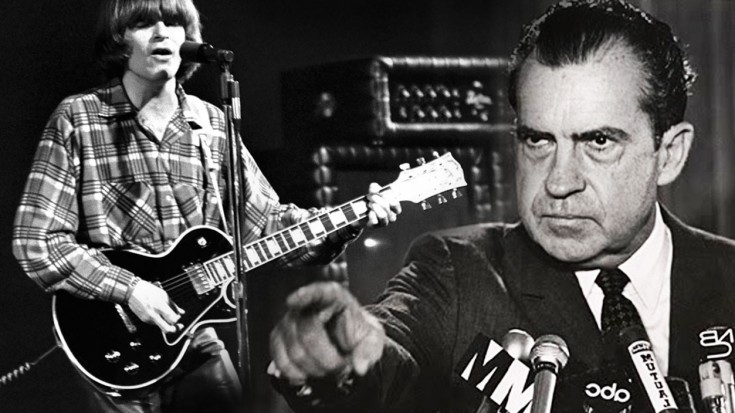
Some folks are born silver spoon in hand
Lord, don't they help themselves, no
But when the taxman comes to the door
Lord, the house looks like a rummage sale, yeah
Lord, don't they help themselves, no
But when the taxman comes to the door
Lord, the house looks like a rummage sale, yeah
Yeah, some folks inherit star-spangled eyes
They send you down to war
And when you ask 'em: "How much should we give?"
They only answer: "More, more, more"
They send you down to war
And when you ask 'em: "How much should we give?"
They only answer: "More, more, more"
Fortunate Son | Creedence Clearwater Revival
Monday, November 18, 2019
BRO ON THE GLOBAL TELEVISION BEAT

Arts Express Paris Correspondent Professor Dennis Broe presents his report on location attending a television festival at Fontainebleau, France - The Americans Are Coming! And how what you'll be seeing on the small screen in the near future is impacted by corporate monopolies, class tensions and class privilege, the Trump doctrine, lobbyists - and progressive content in a collision course with ratings.
Listen To The Show HERE
Friday, July 12, 2019
ARTS EXPRESS

ARTS EXPRESS RED EYE MOVIE REVIEWS - Red Hot And Saucy
Served Up Here
The Gold Glove: Fatih Akin Takes The 'Glove' Off, In This Take No Prisoners Socio-Politically Rooted Horror Spree
"Your heroes are losers. You are supporting a lost cause. Believe me, I knew the original Nazis. Growing up I was surrounded by broken men, men who came home from the war filled with shrapnel and guilt, men who were misled into a losing ideology. And I can tell you that these ghosts that you idolize spent the rest of their lives living in shame. And right now, they're resting in hell."
(Arnold Schwarzenegger to Donald J Trump)
At the same time a gruesome serial killer horror film and in no way that at all, Turkish-German filmmaker Fatih Akin's The Golden Glove confounds and fascinates once again, somewhat like his predatory protagonist, luring in audiences with a bait and switch narrative agenda exploiting the notion of controversial entertainment for socio-political shock and awe. And specifically from a cultural outsider's subversive point of view.
The take no prisoners, daring director's perspective focuses yes, on disturbing audiences, but more as mirror reflecting back on themselves with ugly historical truths, than what may be seductively, evidently up on the screen. And specifically how Germany or any western society may appear to the alienated, demonized or victimized outsider - whether immigrant or conquered, destroyed nation historically and in the present time.
The narrative is ostensibly a retelling of the crimes attributed to an actual obscure early 1970s German serial killer Fritz Honka targeting primarily elderly prostitutes inhabiting a dilapidated, exceeding grotesque red light district pub of the title, but much more. The Golden Glove is based on the novel of the same name, revisiting the madman's barbaric exploits, and written by Heinz Strunk.
A blue collar, alcoholic with physically deformed facial features and a raging temper, Honka (a remarkably disfigured, transformed Jonas Dassler) prowls for his female victims at the local bar in question, and takes them home to his attic hovel where he horrifically, beyond graphically rapes, tortures and beats most of them to death, dismembering and stuffing their bodies behind a wall there. And when complaints ensue about the terrible smell, he readily blames the cooking odors of a Greek family he detests as immigrants, living below.
Though Akin would appear to have much more on his mind that similarly sadistically plays with audience minds. We learn in the course of this grueling procession that victims and perpetrators alike are the seeming waste product of a decaying Western civilization following WW II, specifically Germany in this case, leaving in its wake a procession of damaged and destroyed humans. And among them dangerous elements as well.
At one point we learn that the serial killer's father had been a communist sent away to a concentration camp during the war, as was one of Honka's prostitute victims - implying a similar fate of other women like her at the bar as well. And, the telling presence of another mysterious intimidating barfly there, a former SS officer with eventual sadistic malice on his mind at the men's urinal there.
All of which creates a grotesque canvas that might be said to extend from the Hieronymus Bosch and Bruegel sado-masochistic Renaissance hellish landscapes, Germanic even if Dutch - a seemingly self- fulfilling trajectory that may be said to extend from the cruelty and decadence of early capitalism, to the degeneracy and blight of late stage capitalism today.
And consequently, the telling cultural outsider perspective of Akin, a demonic depravity and ironic reversal connected to western demonization of the 'other' - whether referring to misogyny or the horrendous mass murder and serial killing all around the world, justified politically and economically by those controlling western powers.
And not unlike Akin's previous film In The Fade, in which Diane Kruger goes full Antifa with nothing to lose, following the loss of her entire family at the hands of right wing extremists. In other words, the immensely provocative notion of victimization reversal - and the justified perpetrator as motivated by victimization in a persistent cycle perpetuating grief and revenge.
THE OPERATIVE: Diane Kruger Kicks Ass
** 'The world is so hypocritical about the sanctions - it's okay for Israel to blow up children but we can't have the components for medical equipment.'
While the tendency is to not view actors in terms of the characters they play, there may be a pattern regarding the choice of roles. And in the case of Diane Kruger, her recent work demonstrates political conviction, determination and courage rare in a vocation more associated with ambition, conformity, and exclusively careerist considerations.
Such was the case with Kruger's subversive principled role as victim turned sympathetic anti-right wing Neo-Nazi terrorist in the dramatic feature, In The Fade. And no less is her astonishing commendable turn in The Operative - an anti-Zionist espionage thriller particularly daring at this historical moment in time in view of the assault, and even censorship and outlawing, of those critical of Israeli crimes against Palestine and abroad.
And The Operative is no typical espionage thriller, though those basic conventional elements form
the groundwork of the narrative. Rather, as the enigmatic story unravels, Israeli director Yuval Adler opts for psychological components instead - and specifically how spy operations like the Israeli Mossad exploit emotionally vulnerable assets who may be cooperative but not voluntary at all in that regard, under psychological pressure.
Diane Kruger is Rachel, a rootless and alienated German woman who seems to have been cornered into assisting the Mossad as a driver, a favor to a friend while living in Israel. And seemingly personally connected to rebellious resentment against a contemptuous, rejecting half-Jewish father - who harbors critical, liberal views politically against Israel.
And Mossad agents maneuver to ensnare Rachel psychologically and ever deeper into deadly assignments, connected to her value as a multi-lingual teacher - coaxing her off to Iran on a vague assignment, but with cruel and homicidal intended operations conspiring with Kurdish terrorists. And to maintain Rachel in an anxiety-free state of mind while exploiting her for their own illegal ends as they infiltrate a foreign country, the Mossad emotionally pairs her with Thomas (Martin Freeman), a similarly expendable, culturally alienated British asset living in Germany.
A German, French and Israeli co-production, The Operative is based on the novel The English Teacher. Written by former Israel intelligence officer Yiftach Reicher Atir who may have conflicted feelings of his own, The Operative is a deeply engaging and critically important politically and emotionally brutal thriller exposing the Mossad. And Israel as well, a country reportedly possessing 80 secret and globally unregulated and unquestioned nuclear warheads - and with enough fissile material to produce 190 more - while engaging in attempts to sabotage and destroy Iran in that regard, a country possessing none. While back in 2014, former US president Jimmy Carter noted that 'Israel has, what, 300 or more, nobody knows exactly how many' nuclear weapons.
Which would deem The Operative essential filmmaking indeed. A brave production stepping in to confront those challenges - where timid and cowardly or complicit governments and corporate media fear to tread.
Prairie Miller
PETER FONDA, THE LAST INTERVIEW
** "Gary Cooper said something that I didn't understand at the time, he said that if I know what I'm doing, I don't have to act. I didn't understand that, and now I do. And that sounded strange coming from an actor, and it was such a wonderful moment. I feel that freedom - and in Easy Rider, I didn't understand that yet."
Peter Fonda Talks Boundaries, Easy Rider: And a different sort of journey, his life journey in film. And in our conversation, touching on co-starring in his last film theatrically released before his passing, Boundaries - yet another road movie with no less than two Christophers - Plummer and Lloyd; memories of James Stewart, Marlon Brando, and playing football with Elvis; teeth, water, and a song John Lennon wrote about him secretly; life growing up around Henry Fonda as 'uncertain and unformed'; and why "12 Angry Men was my father's Easy Rider."
THE LOAD: What Doesn't Kill You Makes You...Disappear. And which might update that Winston Churchill axiom: History is written by the victor's filmmakers.
A tense, muted, never less than simultaneously grim and confounding, historically laced road movie venture into the heart of darkness of a disappeared country, The Load [Teret] opts for subtlety over sensationalism. Directed by Serbian Ognjen Glavonić, the story follows truck driver Vlada (Leon Lucev), who appears to be transporting an unknown, secretive cargo across a terrifying landscape from Kosovo to Belgrade, being subjected to NATO bombing in 1999. Not only bombing the population, NATO is likewise conducting a propaganda blitz, dropping leaflets across the land intended to convince civilians that destruction, invasion and occupation are their glorious democratic future. While The Load has been cited as referencing the highway thrillers Henri-Georges Clouzot’s The Wages of Fear, and Williams Friedkin’s retelling, Sorcerer.
Glavonić, who has emerged from a young, post-communist Yugoslavia generation of filmmakers, appears most personified here in a despondent, directionless nomadic youth Vlada picks up along the way. An aspiring musician who plays some of his songs on a cassette for Vlada - when asked about the group, the youth's reply provides a stinging metaphor expressing the fate of the broken, disappeared and Western imperialist devoured Yugoslavia itself: My group no longer has a name, because the band broke up when everyone was gone.
While the inferences of The Load remaining ambiguous regarding casualties of war and culpability, have been referred to as a praiseworthy artistic preference - perhaps the truth resides elsewhere. No less than that this Serbian-French collaboration is an ironic co-production between that NATO invader/exploiter and victim country. Which might update and expand that Winston Churchill axiom: History is written by the victor's filmmakers.
Likewise an intriguing update that might have made for an insightful postscript, would have been the inclusion of the current shadow CIA regime change factory known by its front name CANVAS, and secretly functioning in the present time in Serbia. And where self-declared coup president of Venezuela Juan Guaido had been trained to do just that. While preceded by their regime change factory operation that succeeded in the imprisonment there of Socialist President Slobodan Milosevic for war crimes, a subsequent Hague trial and imprisonment over the course of many years - and with Milosevic ultimately declared innocent long after he had died in prison at the Hague, for lack of adequate medical care for a serious heart condition.
Prairie Miller
Wednesday, July 10, 2019

Thursday, March 29, 2018
Thursday, November 2, 2017
In The Fade: Diane Kruger Goes Full Antifa

When Western terrorist attacks by mostly Middle Eastern right wing extremists take place, among the shocked responses in the aftermath, is always the perplexed reaction in disbelief, as to why such a presumably meaningless assault could have taken place. Yet like a long lingering elephant in the room that just won't seem to go away, the evidence is in plain sight.
Say for instance, the murder in recent times and in progress, of over a million people in Iraq and Afghanistan alone by the US military and European allies. And a kind of blowback retaliation on their own soil of the perpetrators, that may not even be those original fighters - but perhaps their surviving inconsolable relatives or children determined to seek revenge.
Such is the intriguing metaphorical premise of Fatih Akin's In The Fade (Aus dem Nichts). The German director of Turkish parentage masterfully flips the script, as Hamburg housewife Katja (Diane Kruger) endures the horror of her Kurdish husband Nuri (Numan Acar), a legal activist for the local Turkish community, along with her young son being murdered in a racially motivated, anti-immigrant targeted bombing of his office by German white supremacist Neo-Nazis.
The emotionally disintegrating, suicidal widow, overcome by feelings of hopelessness and rage, seeks a revenge in kind against the two accused perpetrators - following their acquittal for lack of irrefutable evidence in court. And what ultimately ensues is not just a stunningly executed thriller, but a brilliant parable for our time.
In other words, the immensely provocative notion of victimization reversal, and the perpetrator as perpetrated. Along with ironically, the accusation that has always been raised against Germans where this movie was made - how could you as a people stand by and do nothing while Hitler annihilated civilians and enemies alike in the millions. Well, perhaps exactly what those leveling charges have been doing since then, without much objection or even acknowledgement raised - and the United States alone having killed and continuing to do so, more than 20 million people in thirty-seven victim nations since World War II.
You go, Diane.
Prairie Miller
Arts Express: Airing on the WBAI/Pacifica National Radio Network and Affiliate Stations.
Wednesday, November 1, 2017
CHARACTERS WITH A BAD CONSCIENCE
By Liza Béar
"1945" Opens at Film Forum, New York, November 1--Not to be missed! Once in a while an independent film hits the screens that totally galvanizes you by its sheer filmmaking craft and its insights into human nature.
WATCH THE FILMMAKER INTERVIEWS HERE
Simply titled, 1945, this highly original psychological thriller, superb in every respect: script, directing, ensemble acting, b&w camerawork, musicand of course the overpowering sense of menace and (false) suspicion) created throughout the film. Such a complex & intimate portrait of immediate postwar peasant psychology, such nuanced and sophisticated storytelling about an important subject is award-winning Hungarian director Ferenc Torok's sixth feature.
It's based on The Homecoming, a short story by noted writer Gabor T. Szanyo. WWII has ended. The arrival of two Orthodox Jews, father and son, by train throws the inhabitants of a nearby Hungarian village into a maelstrom of fear, suspicion and havoc as they prepare for the wedding of the town clerk's son. As time allowed, I spoke to Ferenc and Gabor last week about aspects of the original story, the development of the film, and characters with a bad conscience, [note; the interview took place in the Green Room's mirrored clothes closet at JCC].
1945 Film Credits: Writer-director: Ferenc Torok; screenplay Gabor T. Szanto & Torok; director of photography: Elemer Ragalyi; editor: Bela Barsi; music: Tibor Szenzo; production design: Lazlo Rajk.
"1945" Opens at Film Forum, New York, November 1--Not to be missed! Once in a while an independent film hits the screens that totally galvanizes you by its sheer filmmaking craft and its insights into human nature.
WATCH THE FILMMAKER INTERVIEWS HERE
Simply titled, 1945, this highly original psychological thriller, superb in every respect: script, directing, ensemble acting, b&w camerawork, musicand of course the overpowering sense of menace and (false) suspicion) created throughout the film. Such a complex & intimate portrait of immediate postwar peasant psychology, such nuanced and sophisticated storytelling about an important subject is award-winning Hungarian director Ferenc Torok's sixth feature.
It's based on The Homecoming, a short story by noted writer Gabor T. Szanyo. WWII has ended. The arrival of two Orthodox Jews, father and son, by train throws the inhabitants of a nearby Hungarian village into a maelstrom of fear, suspicion and havoc as they prepare for the wedding of the town clerk's son. As time allowed, I spoke to Ferenc and Gabor last week about aspects of the original story, the development of the film, and characters with a bad conscience, [note; the interview took place in the Green Room's mirrored clothes closet at JCC].
1945 Film Credits: Writer-director: Ferenc Torok; screenplay Gabor T. Szanto & Torok; director of photography: Elemer Ragalyi; editor: Bela Barsi; music: Tibor Szenzo; production design: Lazlo Rajk.
Saturday, June 24, 2017
Subscribe to:
Posts (Atom)


